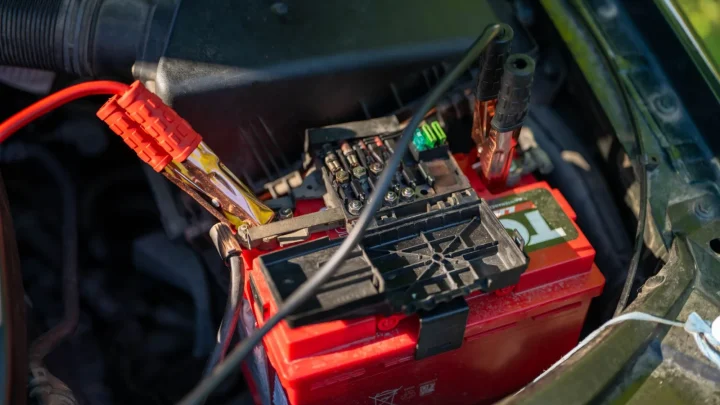
Key takeaways
- A healthy Can-Am should draw under 50 milliamps at rest once every module has gone to sleep.
- Can-Am clusters and body control modules can take 20 to 30 minutes to fully power down, so testing too soon gives a false reading.
- Aftermarket switches, stereos, and light bars wired straight to the battery are the most common cause of a Can-Am that will not hold a charge while parked.
- Pulling fuses one at a time at the front fuse box is the fastest way to isolate which circuit is staying awake.
- A battery that loses voltage even when fully disconnected from the machine is worn out, not a wiring problem.
Ten days on the trailer was all it took. A 2022 Maverick X3 fired every morning of a long weekend, then sat untouched in the garage until the following Wednesday. The key turned to run and the dash stayed black.
The same story shows up across the Can-Am lineup. Defender, Commander, and Outlander owners describe machines that run fine all week, then go dead after ten days parked.
The cause is rarely a bad battery on the first flat. More often something never fully powers down: the gauge cluster holding a wake signal, an accessory spliced straight to the battery, or the DESS system, Can-Am’s Digitally Encoded Security System, listening longer than it should.
Here is the actual test, the number that separates healthy from a problem, and how to isolate the circuit at the front fuse box before you assume the battery is dead.
Why Can-Am Modules Stay Awake, and How Long They Take to Sleep
Every modern Can-Am runs its gauges, lighting, and security system over a shared data network called a CAN bus. Key off does not cut power instantly. The cluster, the body control module, and the DESS reader all need time to save data and confirm nothing is still active before going quiet.
Most modules settle within 5 to 10 minutes. Machines with a large color display or a connected services module, common on later Maverick X3 trims, can take 20 to 30 minutes before the draw drops to its true resting number.
A reading taken at the two minute mark might show 180 milliamps, alarming on its own. The same machine checked again at 25 minutes can settle to 30 milliamps with nothing wrong at all.
Tip
Set a timer for 30 minutes the moment you shut off the key, and do not test until it goes off. A number still falling means the machine is still going to sleep. Only a reading that holds steady for a full minute is worth writing down.
The Key-Off Draw Test: What Healthy Looks Like
You need a multimeter that reads DC milliamps, or a clamp style DC ammeter, plus about 30 minutes of patience. Put the meter in series with the negative battery cable, or clamp it around that cable, once the wait time above has passed.
A healthy Maverick X3, Defender, Commander, or Outlander should settle under 50 milliamps. Most stock machines land closer to 20 to 40 milliamps once fully asleep.
A draw of 150 to 200 milliamps can leave a typical 20 to 30 amp hour battery too weak to start within a week. Above 300 milliamps can do it in half that time.
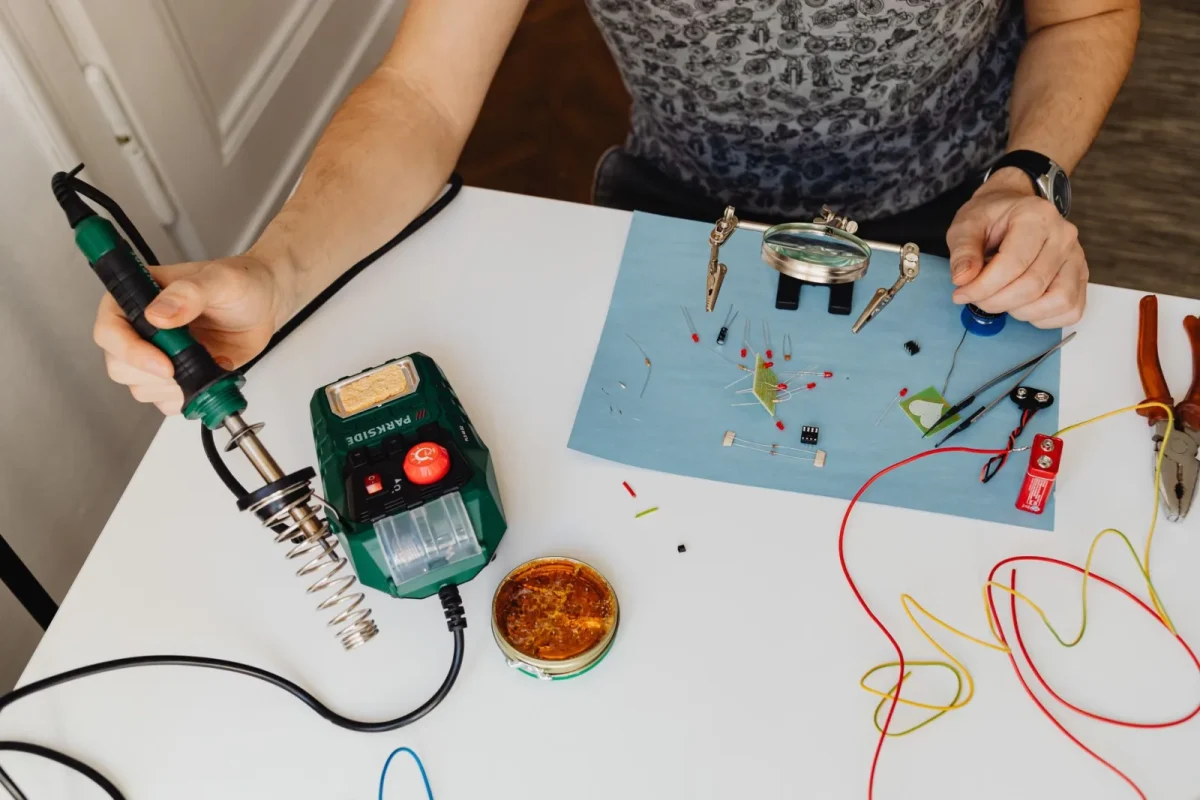
Key-Off Draw Test Checklist
Run through these steps in order for a number you can trust.
- Remove the key fully from the ignition post and close every door and switch
- Wait at least 30 minutes before connecting a meter
- Set the meter to DC milliamps, or clamp a DC ammeter around the negative cable
- Watch the reading for a full 60 seconds; it should hold steady, not drift
- Record the number in milliamps before pulling any fuse
Isolating the Circuit: Fuse-Pull Method at the Front Fuse Box
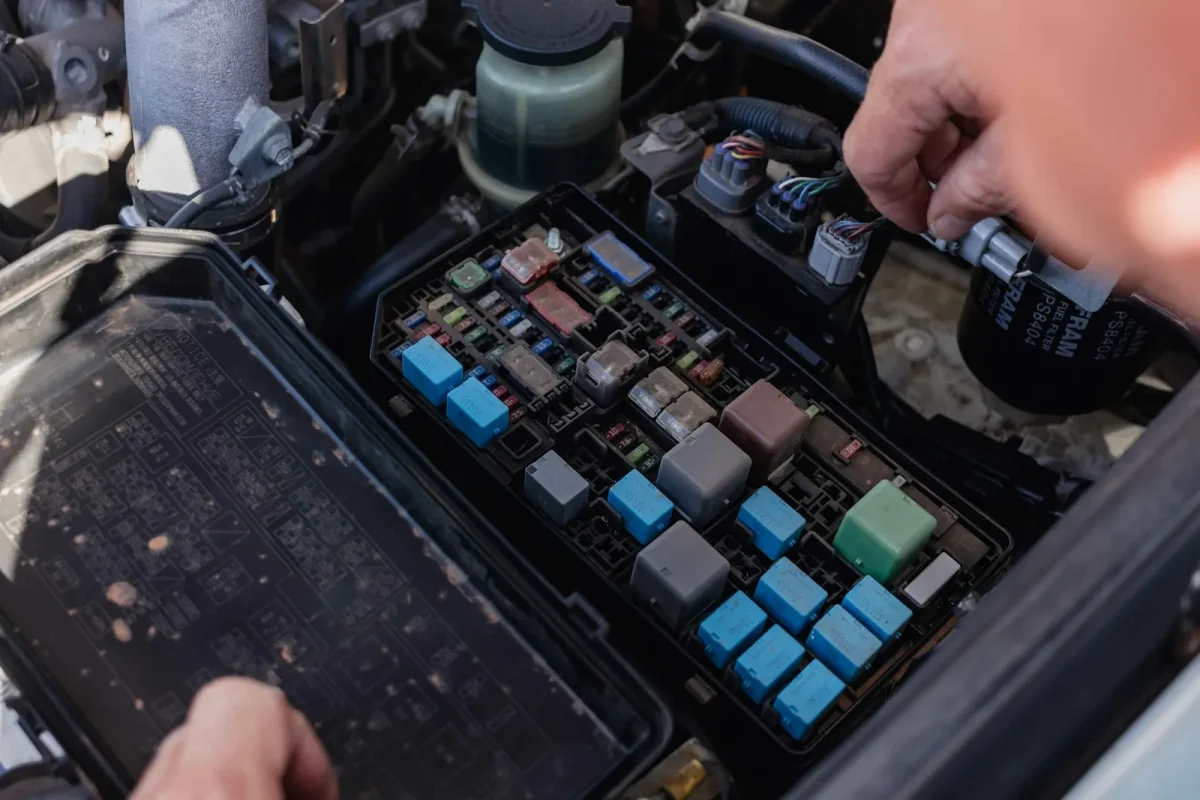
Once you have a real number above 50 milliamps, the front fuse box is where you isolate it. On most Can-Am side by sides it sits under the hood near the battery tray; check the table below for your model.
With the meter still connected, pull one fuse at a time, accessory circuits first, and wait 10 to 15 seconds after each pull. The fuse that drops the reading is your answer, and a 220 milliamp draw falling to 25 milliamps points straight at whatever that circuit feeds.
Reinstall each fuse before pulling the next so you only change one variable at a time. A fuse can look fine and still be open, so confirm any suspect one with the meter set to ohms, since a good fuse reads close to 0 ohms.
If pulling every fuse fails to move the number, look for wiring spliced straight onto the battery terminals with its own inline fuse. That kind of connection bypasses the box entirely, no matter how long you search inside it.
Model Notes: Maverick X3, Defender, Commander, and Outlander
Every platform behaves a little differently once the key comes off. Use this table first, then check the notes below for your model.
| Model | Typical Sleep Time | Normal Key-Off Draw | Front Fuse Box Location |
|---|---|---|---|
| Maverick X3 (2017-2024) | 15-25 minutes | 20-45 mA | Under the hood, next to the battery tray |
| Defender (2016-2024) | 10-20 minutes | 25-45 mA | Under the hood or behind the front cargo latch panel |
| Commander (2011-2024) | 10-15 minutes | 20-40 mA | Under the hood, centered above the battery |
| Outlander (2012-2024) | 5-15 minutes | 15-35 mA | Under the front hood, pre-2012 models under the seat |
Maverick X3
The optional 7 inch color display draws more at rest than any other Can-Am cluster, so give it the full 25 minutes before testing. Aftermarket switch panels, common on X3 builds, are often wired straight to the battery instead of through a switched circuit.
Defender
Work trims often carry a factory accessory power point in the cargo bed, wired hot at all times to run a cooler or a charger. That convenience is exactly the kind of circuit that bleeds a battery down with nothing plugged in but a charger’s indicator light.
Commander
The DESS reader sits close to the ignition switch, and a key left resting in the cup holder rather than pulled away can keep it partially active. Move the key a few feet from the ignition when parking more than a day or two.
Outlander
Older analog cluster models typically show the lowest resting draw of the four, often under 20 milliamps. A sudden jump into the hundreds usually points to an added accessory, since the factory wiring is simple.
Common Culprits: Clusters, DESS, and Hardwired Accessories
Three circuits cause most Can-Am parked drains: a cluster stuck in a restart loop, an accessory wired straight to the battery, and, rarely, the DESS system itself.
A cluster that will not sleep is often triggered by a loose ground behind the dash or a firmware quirk after a battery disconnect. Instead of powering down, it wakes itself every few seconds, and each cycle costs a small burst of current that adds up over days.
Light bars, stereos, USB chargers, and dash cams wired straight to the battery instead of through a switched circuit stay live around the clock. A single indicator LED only pulls a few milliamps, but four or five on a heavily accessorized machine add up fast.
A Shop Story: The Switch Panel That Never Slept
A 2020 Maverick X3 would not hold a charge more than five days, even after a full battery replacement. The owner had added a six switch accessory panel for a light bar, a winch, and a work light, wired directly to the battery with an always hot feed for its backlighting.
Key off draw measured 210 milliamps after a full 30 minute wait, four times a healthy number. Pulling the panel’s fuse dropped it straight to 28 milliamps.
The six backlit switches and a relay coil left energized around the clock accounted for the other 182 milliamps. Rewiring the panel through a relay tied to the ignition circuit, so it only powers up with the key on, fixed it for about 18 dollars in parts and an hour of labor.
Real Parasitic Draw or Just a Tired Battery
Not every parked drain is a wiring problem. A worn out battery can mimic a parasitic draw closely enough to send you chasing fuses for nothing.
Fully charge the battery, disconnect both cables so nothing can draw from it, and let it sit 24 hours before checking resting voltage. A healthy AGM battery isolated like this loses only a few hundredths of a volt.
If it drops from around 12.8 volts to 12.4 volts or lower with nothing connected, the battery has a bad cell or heavy sulfation, and no amount of fuse pulling fixes that. Most Can-Am AGM batteries hold up 3 to 5 years; one already past that mark, especially if run dead once or twice before, loses its ability to hold a charge on its own.
A load test settles any doubt. A battery holding above 9.6 volts for 15 seconds at half its rated cold cranking amps is still good; one that collapses toward 6 or 7 volts needs replacing regardless of what the draw test showed.
Getting Your Can-Am Back to Reliable
A parked drain comes down to three things: how long you waited before testing, which fuse killed the draw, and whether the battery is simply old. Work through them in that order and most owners find the answer without a trip to the dealer.
Keep a note of the draw number, the date, and which fuse you pulled. If the number creeps back up later, that history tells you whether the fix held or a second circuit is adding to the problem.
A healthy Maverick X3, Defender, Commander, or Outlander should start on the first try after two weeks in the garage, not just after an overnight charge. Test it once with the numbers above and that first try becomes the normal one again.
Frequently asked questions
How much key off draw is normal on a Can-Am?
A healthy Maverick X3, Defender, Commander, or Outlander should settle to under 50 milliamps once every module has gone to sleep, and most stock machines land closer to 20 to 40 milliamps. Anything holding steady above 50 milliamps after a full 30 minute wait is worth chasing down. A draw above 150 milliamps can leave the battery too weak to start within a week.
Why does my Can-Am seem fine right after I turn the key off, then drain overnight?
The gauge cluster, the body control module, and the DESS reader all take time to finish their shutdown routine, and that can take 20 to 30 minutes on some models. A reading taken in the first few minutes will look high even on a healthy machine. Wait the full 30 minutes before you trust any number.
Where is the front fuse box on a Can-Am side by side?
On the Maverick X3, Defender, and most Commander models it sits under the hood close to the battery tray. Late model Outlander machines from 2012 forward keep it in the same area, while older Outlander models place it under the seat instead. Check the diagram printed on the underside of the fuse box lid for your exact layout.
Can an aftermarket light bar or stereo really drain a Can-Am battery when parked?
Yes, and it is one of the most common causes of a parked drain. Anything wired straight to the battery instead of through a switched accessory circuit stays live around the clock, and a few backlit switches or a relay left energized can add up to over 100 milliamps on their own. Wiring the accessory through a relay tied to the ignition circuit usually solves it completely.
How do I know if my Can-Am battery is just old instead of having a wiring problem?
Fully charge the battery, disconnect both cables, and let it sit for 24 hours with nothing connected. A healthy AGM battery loses only a few hundredths of a volt in that time. If it drops from around 12.8 volts to 12.4 volts or lower on its own, the battery has a bad cell and needs to be replaced regardless of what any draw test shows.

Vidya Verma
Vidya Verma is a UTV and powersports technician with hands-on experience diagnosing electrical, charging, and starting problems on Polaris, Can-Am, and other side-by-side platforms. She writes practical, workshop-tested repair guides that help owners troubleshoot faults, choose the right parts, and get their machines running reliably in the field. When she's not under the hood, she's out riding trails and stress-testing the same fixes she recommends.