Dual Battery Setup for a UTV
Running a winch, lights, audio, or a fridge off one small starting battery invites a dead machine at the worst time. Here is how to add a second battery correctly,…
A weak or poorly connected battery is the number one reason a UTV cranks slowly, clicks, or dies overnight. These guides cover charging a flat battery the right way, reading resting and loaded voltage, finding a parasitic drain that empties the battery while it sits, and choosing between lead-acid, AGM, and lithium for your machine. You will see the real numbers that matter: 12.6 to 12.8 volts at rest for a healthy pack, under 0.05 amps for an acceptable key-off draw, and the crank voltage that separates a good battery from a tired one. Model-specific pages point out where each brand hides its main ground and how corrosion at that single lug can mimic a failed starter.
20 guidesRunning a winch, lights, audio, or a fridge off one small starting battery invites a dead machine at the worst time. Here is how to add a second battery correctly,…
White or green crust on your battery terminals is not just ugly, it adds real resistance that can mimic a dying battery. Here is how to clean it safely, confirm…
A parked UTV battery can die from self discharge and parasitic draw alone, long before any freeze touches it. Here is how to keep one healthy from October to spring,…
Every RZR trim wants a slightly different battery, and picking the wrong one costs you cranking power or a case that will not fit the bracket. Here is how to…
A Kawasaki Mule that keeps killing batteries is usually pointing at one of three things: a parasitic draw, a charging system that cannot keep up, or a battery that has…
A rested voltage reading can look perfect and still leave you stranded. Here is how to put real amperage on a UTV battery and get an answer you can trust.
A Grizzly that cranks strong one day and will not turn over the next usually points to one of three things: a parasitic draw, a failing rectifier regulator, or a…
A single number on a multimeter can tell you almost everything about a UTV battery, if you know what that number is supposed to say. Here is the full voltage…
A flat battery does not have to mean a dead one. Here is how to bring a UTV battery back to full strength without cooking the cells or yourself in…
LiFePO4 batteries shed serious weight and crank hard, but cold mornings and the wrong charger can turn that advantage into a dead machine. Here is the honest comparison against AGM…
Flooded lead-acid, AGM, and lithium batteries all bolt into the same tray, but they behave very differently in the cold, on rough trails, and on your wallet. Here is how…
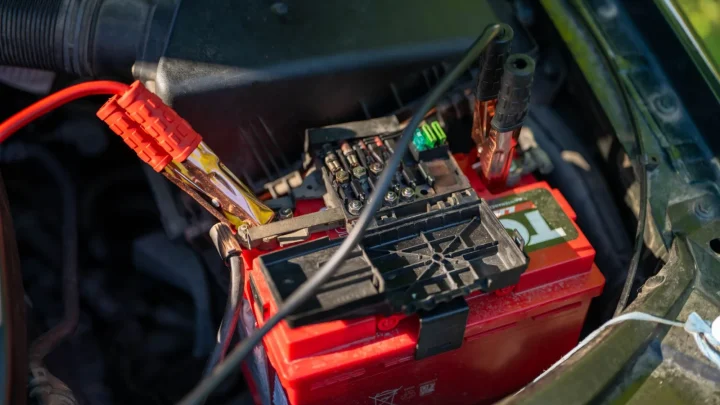
A dead battery at the trailhead is an easy fix if you connect the cables in the right order. Get it wrong, or trust the wrong donor vehicle, and a…