Key takeaways
- A bench test isolates the starter motor from every other part of the circuit.
- A healthy starter spins hard and kicks the drive gear out within a fraction of a second.
- A weak test battery is the most common reason a good starter gets condemned by mistake.
- Free spin amp draw on a bench reads lower than the actual cranking draw on the engine.
- A replacement starter commonly costs 90-300 USD, so confirm it is bad before you buy one.
The starter is off the machine and sitting on your bench, and now you need an answer before you spend money on a replacement or bolt the same one back in. Maybe it clicked once and went quiet. Maybe it just droned instead of cranking.
Either way, the only honest way to know if the motor is actually bad is to feed it power directly and watch what happens. A bench test does exactly that.
It takes the wiring, the ground, the solenoid, and the ignition switch completely out of the equation. Ten minutes at a workbench with a battery and two cables will tell you more than another hour spent poking around the machine with a test light.
This walks through wiring a starter safely for a bench test, what a good one looks and sounds like, and how to measure current draw for a clean answer instead of a guess.
What a Bench Test Actually Tells You
A bench test isolates one variable: the starter motor itself. On the machine, a slow crank or a single click could be a weak battery, a corroded cable end, a bad ground, or a failing solenoid.
None of that travels with the starter to the bench. Once it is clamped down and wired straight to a fresh battery, there is nothing left to blame but the motor, the brushes, and the drive gear.
A good unit spins hard and throws the drive gear out every time. A bad one tells on itself just as fast.
This test does not replace the circuit checks on the machine itself. If you skipped load testing the battery and checking voltage drop on the cables before you pulled the starter, you may be about to test a part that was never the problem.
Gather What You Need Before You Clamp It Down
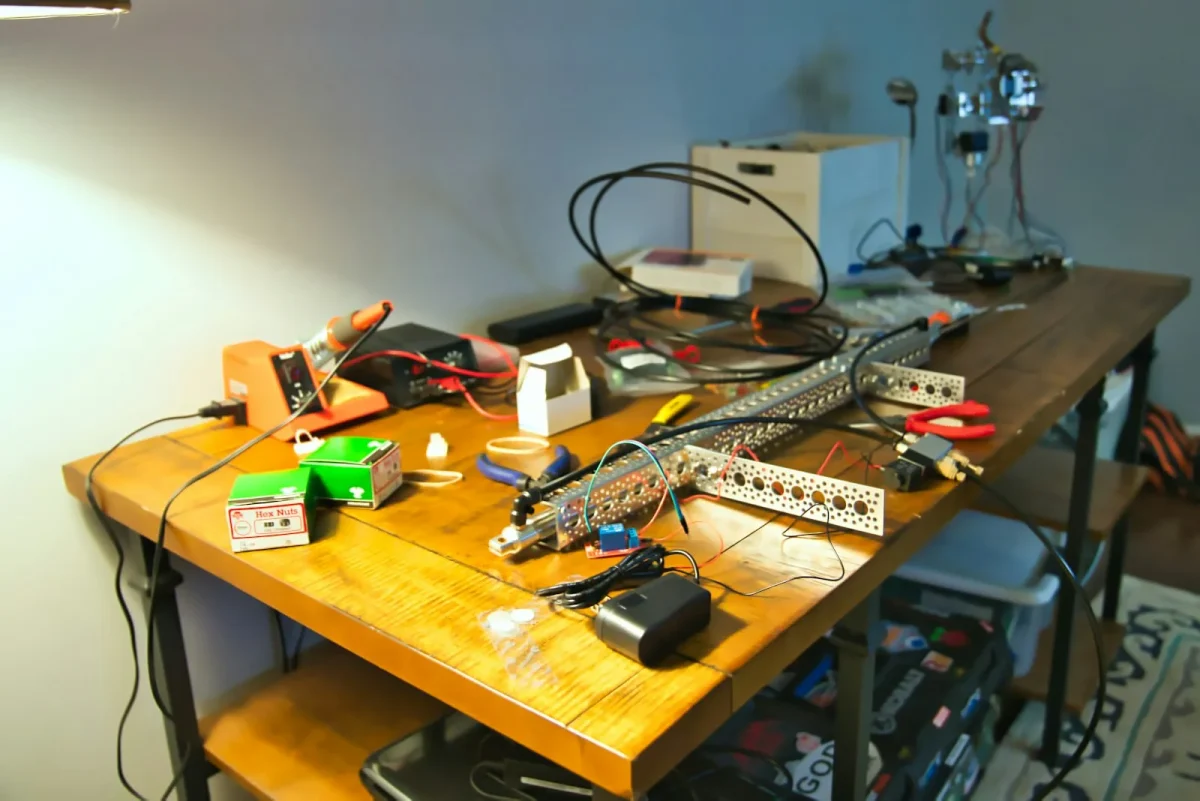
You do not need a shop full of equipment for this, but a few things matter. A weak test battery or thin cables will make a good starter look bad, so do not improvise here.
- A fully charged 12 volt battery reading 12.6-12.8 volts at rest
- Heavy jumper cables or test leads, 4 gauge or heavier, rated for at least 250 amps
- A bench vise, C-clamp, or a helper to hold the starter still
- Safety glasses and a pair of gloves
- A wire brush or contact cleaner for the battery terminals and starter stud
- A clamp-on amp meter for an exact current reading, optional but useful
Step by Step: Wiring the Starter to a Battery Safely
Clamp the starter body in a vise, or have a helper brace it with a heavy glove. A starter that kicks loose while spinning can take a finger with it, so secure it before power touches the terminals.
Safety
Clamp the starter down before you connect anything. A spinning, unsecured starter can twist hard enough to jump off a bench, and the drive gear kicking out under load can catch a finger or a sleeve. Wear safety glasses for every test, since a shorted terminal throws sparks and hot metal.
Connect the negative jumper cable to the starter case or mounting ear first. This gives the current a path to ground before the motor sees any voltage at all.
Touch the positive cable to the main battery terminal on the starter for no more than 3-5 seconds. Pull back, let the starter rest for 30 seconds, and repeat if you need a second look.
Tip
Keep each test burst under 5 seconds. A starter has no cooling fan and no airflow sitting on a bench, so repeated long bursts can cook the windings on a motor that was actually fine.
If the starter has a separate small terminal for a trigger wire, ignore it for this test. You are feeding the main terminal directly to copy what a good solenoid would deliver under load.
Reading the Spin: Good, Weak, or Dead
What happens in that first second tells you almost everything. Pay attention to the sound, the speed, and whether the drive gear moves.
A Strong, Clean Spin With the Gear Kicking Out
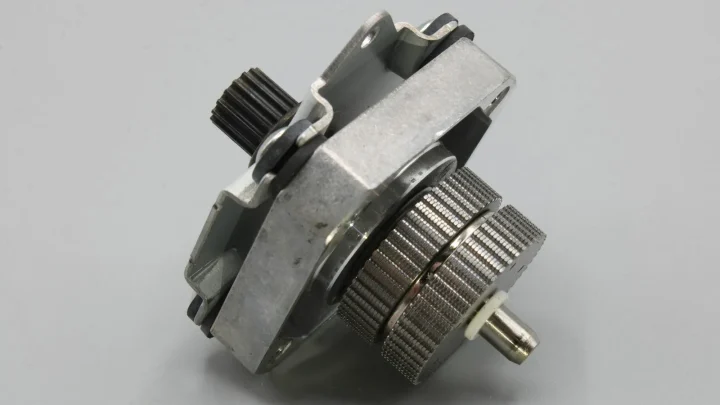
A healthy starter spins up almost instantly and sounds strong and even. The drive gear, often called the Bendix, kicks out toward you within a fraction of a second, every time you touch the cable.
If this is what you see, the fault was almost certainly in the wiring, the solenoid, or the battery on the machine, not the motor. Reinstall it and go test the rest of the circuit.
A Slow or Weak Spin
A starter that spins slowly, sounds strained, or hesitates before it gets going is drawing too much current for what it produces. Worn brushes, a dragging bushing, or a shorted winding in the armature all show up this way.
This starter is done, even if it eventually spins. Do not reinstall it and hope it improves once it is back on the machine.
No Movement, a Single Clunk, or Grinding
No spin at all with a fresh, fully charged battery points to an open circuit inside, often brushes worn past the copper or a broken internal wire. A single clunk with no spin can mean the drive gear or the armature is seized.
A grinding noise without the gear kicking out usually means a broken tooth on the drive gear itself. None of these three are worth repairing on an older starter.
Smoke, Sparks, or a Burning Smell
Smoke, a burning smell, or sparking from inside the case, not just at the terminal connection, means a shorted winding. Disconnect the cables immediately and do not test it again.
That starter is scrap. Reusing it risks damage to the battery and cables on your next attempt.
Checking Amp Draw for a More Exact Number
Listening and watching gets you most of the way there, but a clamp meter around the positive cable gives you a number instead of a guess. Clip it around the cable itself, not the battery post, and read the draw the instant the starter spins.
Free spinning on the bench with no load pulls less current than cranking a real engine against compression. Use the bench number to compare against a healthy baseline for that size of starter, not against on-engine cranking specs.
| Starter / Engine Size | Free Spin Draw (Bench) | Free Spin RPM (approx) | Typical Cranking Draw (On Engine) |
|---|---|---|---|
| Small, 300-500cc (Honda Rancher, Polaris Sportsman 450) | 15-35 amps | 3500-6000 rpm | 60-90 amps |
| Mid-size, 550-900cc (Polaris RZR 570/900, Can-Am Maverick Trail) | 30-55 amps | 3000-5000 rpm | 90-130 amps |
| Large or turbo, 925cc and up (RZR Turbo, Maverick X3, Ranger 1000) | 50-90 amps | 2500-4500 rpm | 120-180 amps |
If your reading lands well below these ranges for your machine’s size and the spin still feels weak, the starter is confirmed bad. If it lands within range and spins strong, put your money into the cables, the solenoid, or the ground instead.

The Mistake That Ruins a Good Bench Test
I have watched a perfectly good starter get condemned more than once, and almost every time the test battery was the actual problem. A half-charged battery pulled off a shelf will make a strong starter sound weak and spin slow.
The tech walks away blaming the wrong part and buys a starter the machine never needed. Before you trust any bench test result, put a meter on the test battery itself.
It should read 12.6 volts or higher at rest. If it sags under 12.2 volts, charge it fully or swap to a known-good battery before you judge the starter.
Before You Reinstall It or Order a New One
If the starter spun strong, kicked the drive gear out clean, and the amp draw landed in range, it is good. Put your effort into the cables, the ground, the solenoid, and the battery on the machine instead of buying a part you do not need.
If it spun weak, stayed silent, or smoked, replace it. A new starter for most UTVs runs 90-300 USD depending on the model, and 20 minutes on a bench is worth it before you spend that money.
When you reinstall it, torque the mounting bolts to 16-20 ft-lbs and the battery terminal nuts to 70-90 inch-pounds, and clean every contact surface before you bolt it back together. Either way, you now have a real answer instead of a guess.
Frequently asked questions
Can I bench test a starter without pulling it off the machine?
Not reliably. Testing it in place still includes the wiring, the ground, and the solenoid, so a weak result could point to any of those instead of the motor. Pull it and wire it straight to a battery for a clean answer.
What size battery do I need for a bench test?
Any fully charged 12 volt battery works, including a spare bolted in another machine or a portable jump pack rated for at least 250 amps. What matters is that it reads 12.6 volts or higher at rest, not the physical size of the battery.
Is it normal for a starter to sound different on the bench than it does on the engine?
Yes. Free spinning with no load is quieter and faster than cranking against engine compression, so a different sound is normal. What matters is a strong, even spin and the drive gear kicking out cleanly every time.
How long can I run the bench test before it damages the starter?
Keep each burst to 3-5 seconds with at least 30 seconds of rest between tries. A starter has no airflow sitting on a bench, and repeated long bursts can overheat a motor that was actually fine.
What if the starter spins fine the first time but weak on the second or third try?
That points to heat building up in worn brushes or a marginal winding. Let it cool for several minutes and test again. If it stays weak, the starter is on its way out even though the first pull looked fine.

Vidya Verma
Vidya Verma is a UTV and powersports technician with hands-on experience diagnosing electrical, charging, and starting problems on Polaris, Can-Am, and other side-by-side platforms. She writes practical, workshop-tested repair guides that help owners troubleshoot faults, choose the right parts, and get their machines running reliably in the field. When she's not under the hood, she's out riding trails and stress-testing the same fixes she recommends.