Key takeaways
- Rapid clicking almost always means low voltage, not a dead starter.
- A battery resting below 12.0 volts or sagging under 9.6 volts while cranking needs to be charged or replaced.
- Voltage drop over 0.5 volts on a cable or ground is enough resistance to starve the solenoid.
- A jump pack that stops the chatter instantly confirms the battery is the weak link.
- Clean and re-torque the battery terminals and ground strap before you spend money on a new starter.
Turn the key and instead of a strong crank, you get a fast rattling clack-clack-clack-clack from somewhere under the seat, then silence the second you let off. That sound is not a stubborn machine being difficult. It is the electrical system telling you it does not have enough current to finish the job.
Rapid clicking is a different animal from a single solid click. One click followed by silence usually points at a solenoid or starter getting no power at all. Rapid, repeated clicking means power is getting through, just not enough of it, so the circuit cycles on and off several times a second.
The good news is that this sound narrows things down fast. This complaint traces back to a weak battery or a corroded connection far more often than a failed starter motor. A meter and twenty minutes will tell you which one you are dealing with.
What That Chattering Sound Actually Means
Press the start button and a small trigger wire energizes a coil inside the starter solenoid. That coil pulls a plunger across to connect the battery directly to the starter motor, which then demands a serious slug of current, often 150 to 300 amps for a moment on a typical UTV starter.
If the battery or the wiring in between cannot supply that without the voltage caving in, the voltage feeding the solenoid coil drops below what it needs to stay pulled in, usually somewhere around 8 to 9 volts. The plunger releases, the heavy load disappears, and voltage recovers for an instant before the solenoid pulls in again.
Repeat that cycle five to ten times a second and you get the rapid, rattling chatter owners describe over the phone. It is a voltage sag problem playing out mechanically, right in front of you.
Start With the Battery: Rest Voltage and a Load Test
Turn the key off and let the machine sit for at least 30 minutes so any surface charge settles, then put a meter across the two terminals. A fully charged battery reads 12.6 volts at rest, 12.4 volts is roughly 75 percent charged, and 12.0 volts or below is discharged enough to cause exactly this kind of chatter.
Resting voltage only tells half the story. A battery can sit at 12.4 volts and still collapse the instant it faces a real load, so run a load test or watch the meter while a helper cranks the machine. A healthy battery holds above 9.6 volts through five to ten seconds of cranking.
If the number falls into the 6 to 8 volt range and stays there, the battery cannot deliver the amperage this starter needs, no matter what the resting voltage showed. Most UTV batteries are rated between 200 and 320 cold cranking amps, and a battery more than three or four years old that fails a load test is due for replacement.
Tip
Charge the battery fully before testing anything else. A smart charger brings a deeply discharged battery back to full in 6 to 8 hours, and testing cables or a solenoid against a half-charged battery only gives false readings that send you chasing the wrong part.
Here is the quick reference for every number in this test, from the battery itself through to the charging system.
| Test | Good reading | Marginal | Problem |
|---|---|---|---|
| Battery resting voltage | 12.4 to 12.6 volts | 12.1 to 12.3 volts | Below 12.0 volts |
| Battery voltage while cranking | Above 9.6 volts | 9.0 to 9.6 volts | Below 9.0 volts |
| Positive cable voltage drop | Under 0.2 volts | 0.3 to 0.5 volts | Over 0.5 volts |
| Ground path voltage drop | Under 0.2 volts | 0.3 to 0.5 volts | Over 0.5 volts |
| Charging output at 3000 rpm | 13.8 to 14.7 volts | 13.2 to 13.7 volts | Below 13.0 volts |
Voltage Drop: Hunting the Resistance That Starves the Solenoid
A battery that passes its load test can still cause rapid clicking if the cables or grounds between it and the starter carry hidden resistance. After a weak battery, this is the next most common cause on machines that chatter instead of crank.
Testing the Positive Cable
Set the meter to DC volts, put one probe directly on the battery positive post rather than the cable clamp, and put the other probe on the far end of that cable at the solenoid’s battery terminal. Have a helper crank the machine and read the meter during the actual attempt, not at rest.
A good cable drops under 0.2 volts. A reading of 0.3 to 0.5 volts is marginal and worth cleaning or replacing, and anything over 0.5 volts is your fault, full stop.

Testing the Ground Path
Test the ground path the same way: one probe on the battery negative post, the other on the engine block or starter case, then again from the block to the frame if the machine uses a separate ground strap. The same thresholds apply, under 0.2 volts is good and over 0.5 volts is the problem.
Grounds hide in plain sight. A strap can look clean on the outside while the metal underneath the bolt head has corroded enough to choke off current flow.
Why a Jump Pack Almost Always Stops the Chatter
A portable lithium jump pack, even a small one rated 400 to 800 cranking amps, can dump a burst of current that a tired battery simply cannot match. Clip it on according to the instructions, and if the rapid clicking instantly turns into a strong, normal crank, you have your answer.
That is a diagnosis, not a repair. Once the machine is running, check the charging voltage at the battery with the engine at a moderate rpm. A reading of 13.8 to 14.7 volts means the charging system is doing its job and the battery itself is what let you down.

Corrosion and Connections Worth Checking Closely
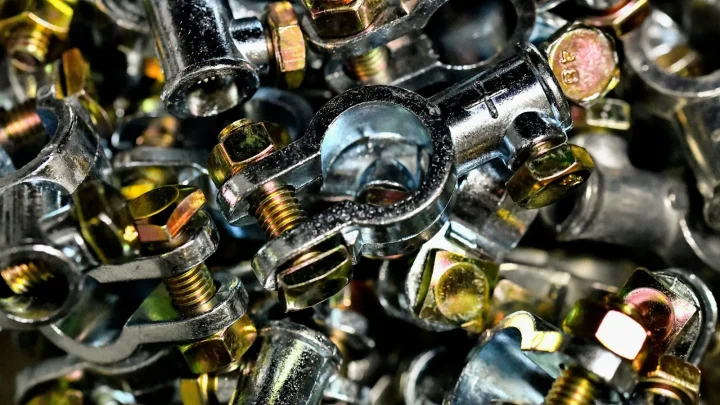
Three spots cause most of the resistance problems behind rapid clicking: the battery terminals themselves, the ground strap between the engine and the frame, and the big terminals on the starter solenoid. White or greenish crust on a terminal is corrosion, and even a thin layer adds real resistance.
Pull each connection, clean it back to bare metal with a terminal brush, and reinstall with a light coat of dielectric grease to keep moisture out. Battery terminal hardware typically only needs 50 to 70 inch-pounds of torque, snug and secure without cracking the post.
A terminal cleaning kit runs 8 to 12 dollars and is cheap insurance against this exact complaint.
We had a Ranger come through the shop with a customer certain the starter was on its way out, rapid clicking and a battery that looked practically new. The load test came back fine, but the ground strap bolted to the frame had a thin film of rust hiding under the bolt head where nobody would spot it without pulling it loose. Cleaning that single connection and adding a star washer fixed a problem the customer had been ready to pay for a new starter to solve.
When Rapid Clicking Isn’t the Battery
A worn starter can sometimes cause its own version of this symptom. As the internal bushings and brushes wear, the motor’s own resistance climbs, and it can pull enough current to sag the voltage even from a battery that tests fine on the bench.
A marginal starter relay ahead of the solenoid can chatter on its own before the solenoid ever sees a clean 12 volts, which mimics a battery problem closely enough to fool a quick glance. Cold weather adds another variable, since thickened engine oil raises cranking resistance and battery capacity itself can drop 30 to 50 percent at 0 degrees Fahrenheit compared with 80 degrees.
Safety
Battery terminals can spark, and batteries vent hydrogen gas, especially under load or right after charging. Keep sparks and flame away from the battery, wear eye protection when cleaning terminals or connecting a jump pack, and never lay a wrench or tool across both terminals at once.
Quick Test Order, and What to Do Next
Work through the circuit in this order and you will find the fault without swapping parts you do not need.
- Check resting battery voltage: want 12.4 to 12.6 volts after sitting 30 minutes.
- Load test the battery while cranking: must hold above 9.6 volts.
- Charge fully if below 12.4 volts, then retest before going further.
- Measure voltage drop on the positive cable during a real crank: under 0.2 volts.
- Measure voltage drop on the ground path during a real crank: under 0.2 volts.
- Clean and re-torque both battery terminals and the ground strap connection.
- Try a jump pack to confirm whether the battery is the limiting factor.
If every number above comes back clean and the machine still chatters, have the starter and the relay checked next.
Most rapid clicking complaints end with a charged or replaced battery and a cleaned ground connection, not a new starter. Work through the numbers in order and replace only the part that actually fails a test.
Keep a spare terminal brush and a charged jump pack on hand. The next cold morning that chatter shows up, you will know exactly where to put the meter first.
Frequently asked questions
Why does my UTV click rapidly instead of cranking when I hit the start button?
Rapid clicking means the solenoid is pulling in and then dropping out several times a second because voltage is sagging under the load. The most common cause is a battery that reads below 12.4 volts at rest or collapses under 9.6 volts while cranking. High resistance in the cables or grounds can cause the identical symptom even with a decent battery.
Will jump starting my UTV fix rapid clicking for good?
A jump pack usually stops the chatter immediately, but that only proves the battery could not supply enough current on its own. Treat it as confirmation, not a repair, and charge or replace the battery afterward. If the charging voltage at the battery reads below 13.0 volts with the engine running, the charging system needs attention too.
Can a bad ground cause rapid clicking even with a good battery?
Yes. A corroded ground strap between the engine and frame can drop over 0.5 volts under cranking load, which is enough resistance to starve the solenoid the same way a weak battery does. Test voltage drop across the ground path while cranking, since under 0.2 volts is normal and over 0.5 volts needs cleaning or replacement.
How cold does it have to be for weather to cause this?
Battery capacity can drop 30 to 50 percent at 0 degrees Fahrenheit compared with 80 degrees, so a battery that was marginal in summer often reveals itself on the first hard freeze. If the rapid clicking only shows up on cold mornings, load test the battery cold, since a warm day test can look fine and still miss the problem.
Is rapid clicking ever a sign the starter itself is bad?
It can be, though it is less common than a battery or cable problem. A worn starter with high internal resistance can pull enough current to sag the voltage even from a healthy battery, so only suspect the starter after the battery, cables, and grounds all test within spec.

Vidya Verma
Vidya Verma is a UTV and powersports technician with hands-on experience diagnosing electrical, charging, and starting problems on Polaris, Can-Am, and other side-by-side platforms. She writes practical, workshop-tested repair guides that help owners troubleshoot faults, choose the right parts, and get their machines running reliably in the field. When she's not under the hood, she's out riding trails and stress-testing the same fixes she recommends.