Key takeaways
- A healthy starter relay coil reads between 50 and 120 ohms on a multimeter.
- Swapping in an identical relay from another circuit is the fastest way to test it in the field.
- A relay can click and still fail if its internal contacts are burnt, so always check continuity from pin 30 to pin 87.
- Worn brake or neutral switches can block voltage to the relay and mimic a bad relay entirely.
- A replacement relay costs about 8 to 25 USD and takes only a few minutes to install.
The push button clicks under your thumb and nothing happens. Not a crank, not a whir, not even the single heavy click you would expect from a dead solenoid. The dash lights are on and the fuel gauge still swings fine.
That silence is useful information. A no click, no crank fault almost always points upstream of the solenoid, back to a small four pin relay tucked into a fuse box under the seat.
It is one of the cheapest parts on the machine, often under 20 USD, and it looks identical to a dozen other relays nearby, which is exactly why it gets overlooked.
This guide covers three ways to prove whether that relay is good or bad: a field swap test, a resistance check with a multimeter, and a bench test that puts 12 volts directly on the coil. Most riders finish all three in under 15 minutes.
What the Starter Relay Actually Does
The starter relay is a switch for a switch. Pressing the start button only asks the ignition switch and safety interlocks to carry a tiny signal current, not the heavier current that would burn out a push button. That signal energizes a coil inside the relay, which closes a heavier internal contact and feeds 12 volts to the solenoid trigger wire.
Two circuits live inside that same small case: a low current coil circuit that gets triggered, and a switched output circuit that passes power to the solenoid. A relay can fail in either half, the coil going open, or the contacts burning until they stop passing current even when the coil still clicks fine.
Because the relay sits in the trigger path, it also sits downstream of every safety interlock: the brake switch, the park or neutral switch, and sometimes a seat or hood switch. A relay that never sees 12 volts at its coil is not always bad, since an interlock upstream can be the real problem.
Finding the Relay and Reading the Pins
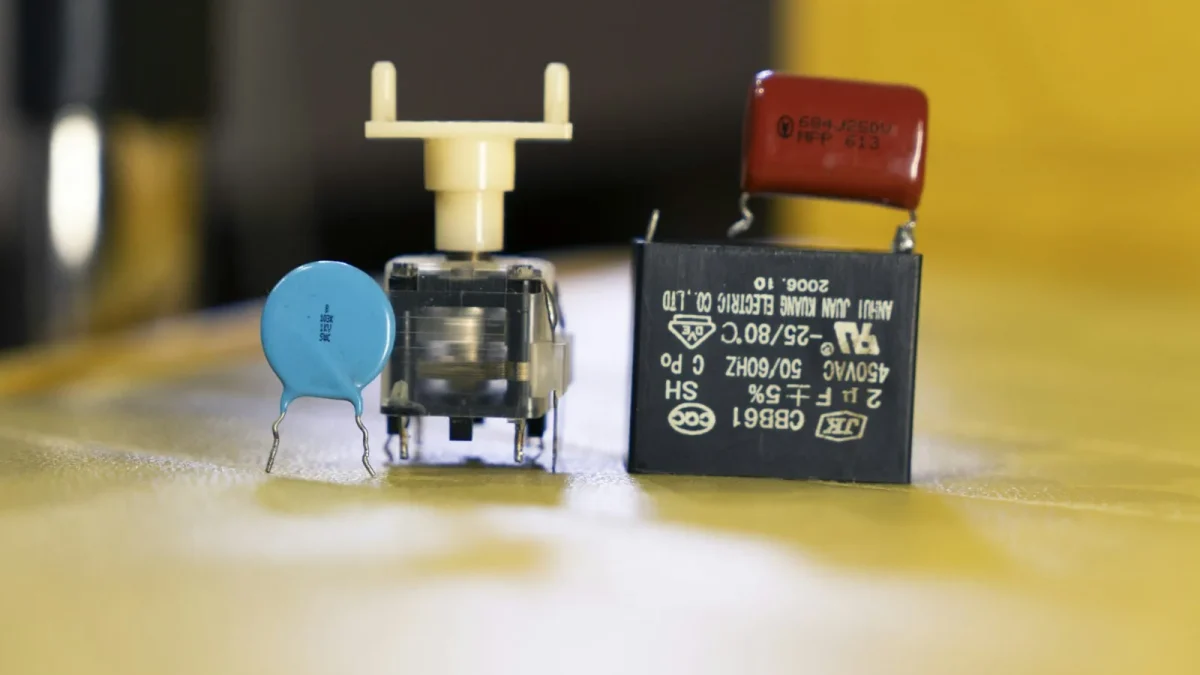
On most side by sides and ATVs, the starter relay lives in a fuse and relay box near the battery, often under the seat or behind a side panel. It is usually a small black cube about the size of a sugar cube, with four or five flat pins on the bottom.
Pull it straight up out of its socket (no tools needed on most machines) and check the numbers molded into the case next to each pin. The standard automotive layout uses two numbers for the coil and two more for the switched contacts.
| Pin | Function | Expected reading |
|---|---|---|
| 30 | Constant feed to the switch contact | 12 to 12.8 volts, key on or off |
| 86 | Coil trigger from start button and interlocks | 0 volts at rest, 12 volts on start with interlocks satisfied |
| 85 | Coil ground or return path | Continuous path to ground, near 0 volts |
| 87 | Switched output to the solenoid trigger wire | 0 volts at rest, 12 volts once energized |
| 85 to 86 (coil) | Coil resistance across both pins | 50 to 120 ohms, most read 70 to 100 ohms |
Some five pin relays add an 87a terminal, a normally closed contact that carries power until the relay is energized. Most UTV starter circuits never use the 87a side, so you can generally ignore that fifth pin for this test.
The Fastest Check: The Swap Test
If your machine carries two or three identical relays in the fuse box, for the fan, the fuel pump, or an accessory circuit, this is the quickest test you can run with zero tools. Pull the suspect relay, pull an identical one from another circuit, and swap the two.
Press the start button. If the machine cranks now, the original relay was bad, and you have your answer in under a minute. If it still will not crank, the relay was never the problem.
Tip
Match the relay by amperage rating and pin count before you swap it, both printed on the case. A fan or fuel pump relay with the same rating and pin layout works as a safe substitute for this test alone. Swap it back once you are done, or install a proper replacement in the starter circuit.
This is the test most shops reach for first, since it needs no meter and no guessing about ohm readings. It only falls short when there is no matching spare relay on the machine.
Coil Resistance: What a Multimeter Should Show
Set a multimeter to its ohms or resistance setting, usually marked with a symbol that looks like an omega. With the relay out of the socket, touch one probe to pin 85 and the other to pin 86, the two coil terminals.
A healthy coil reads somewhere between 50 and 120 ohms depending on the relay brand, though most common UTV starter relays land between 70 and 100 ohms. An open reading, shown as OL or infinite, means the coil wire has broken inside. A reading near 0 ohms means the coil has shorted, which usually trips a fuse too.
A normal reading does not fully clear the relay, though. It only proves the coil winding is intact, not that the switch contacts still work, and the relay can still fail the bench test below if those contacts are burnt.
The Bench Test: 12 Volts and a Jumper Wire
This test proves the whole relay at once, coil and contacts together, using two short jumper wires and a 12 volt source like a charged battery or jump pack.
- Confirm the relay’s amperage and voltage rating on the case before applying power.
- Connect one jumper wire from battery positive to pin 86 and a second from battery negative to pin 85, the two coil pins.
- Listen and feel for a solid click as the relay pulls in, since a weak or silent pull means a failing coil even with a normal resistance reading.
- With the coil still energized, probe pin 30 to pin 87 for continuity, expecting near 0 ohms or a beep.
- Disconnect the coil power and probe 30 to 87 again, expecting an open or infinite reading this time.
If the relay clicks but pin 30 to pin 87 never shows continuity, the contacts are burnt or pitted and the relay is finished, even though the coil tested fine. That combination of a good coil and dead contacts is the most common way these relays fail after a few seasons of heat and vibration.
Safety
Use jumper wires with alligator clips rated for at least 10 amps, and keep the battery terminals away from bare metal on the frame while you work. A short across the coil pins usually just blows a fuse, but a slip near the battery terminals can arc and throw sparks. Keep the machine in park with the parking brake set for this test.
The Interlocks Wired Through the Same Relay
On almost every UTV, the wire feeding pin 86 does not run straight from the start button. It routes through a chain of safety switches first: a brake switch, a park or neutral switch on the transmission, and on some machines a seat or hood switch.
I have watched a rider chase a relay for a full afternoon, testing it three separate ways, only to find a worn brake switch was the reason pin 86 never saw voltage in the first place. The relay itself was fine the entire time.
Before you condemn the relay, confirm 12 volts reaches pin 86 with the key on, the brake held, the transmission in park or neutral, and the start button pressed. If that voltage never shows up, the fault sits upstream in the interlocks, not inside the relay you just tested.
If the Relay Tests Good But It Still Will Not Crank
A relay that passes the resistance check and the bench test, with a solid click and clean continuity, is not the fault here. The next stop is the solenoid itself and the heavy battery cables feeding it.
Check for 12 volts at the solenoid’s small trigger terminal when you press start. If that voltage is present but the solenoid still will not pull in, or pulls in with only a single click and no crank, the fault has moved to the solenoid or the cable and ground path.
A quick voltage drop test across the positive cable and the ground strap, done while a helper cranks, should read under 0.2 volts on each. Anything above 0.5 volts on either cable is enough resistance to starve the solenoid even with a perfect relay ahead of it.
Get It Cranking Again
Once you know the relay is the fault, replacement is simple and cheap. A generic parts store relay with matching pin count and amperage rating runs about 8 to 25 USD, and an OEM part from the dealer typically runs 20 to 45 USD. Either one plugs straight into the same socket with no wiring changes.
Push the new relay in firmly, confirm it seats flush, and try the start button before closing up any panels. Keep the old relay in a glove box or tool bag as a spare you know is bad.
If the swap test, the resistance reading, and the bench test all come back clean, do not keep replacing parts on a guess. Move on to the solenoid trigger wire and the cable voltage drop tests next, since a good relay feeding a tired solenoid produces the same silence at the button that started this search.
Frequently asked questions
How much does a UTV starter relay cost to replace?
A generic parts store relay usually costs 8 to 25 USD, while an OEM relay from the dealer runs 20 to 45 USD. Both plug into the same socket with no wiring changes needed. Labor is minimal since most relays sit in an accessible fuse box.
What should a starter relay read on a multimeter?
Across the two coil pins, a healthy relay usually reads 50 to 120 ohms, most commonly 70 to 100 ohms. A reading of OL or infinite means an open coil, and a reading near 0 ohms means a shorted coil. Either extreme confirms a bad relay.
Can a bad relay cause a single click with no crank?
Yes, if the coil pulls in but the internal contacts are burnt, you can hear a click while no current reaches the solenoid trigger wire. This is why the bench test checks continuity across the output pins, not just the click itself. A resistance reading alone will not catch this failure.
Why does my UTV starter relay work sometimes but not others?
Intermittent operation usually points to heat sensitive internal contacts or a marginal coil that only fails once it warms up. Corroded pins in the relay socket can cause the same intermittent symptom. Try the bench test right after a failed start attempt, while the relay is still warm, for the most accurate reading.
Is the starter relay the same part as the solenoid?
No, the relay is a small low current switch that triggers the solenoid, which is a much larger high current switch that feeds the starter motor directly. The relay usually costs under 25 USD while a solenoid often runs 40 to 90 USD. Confusing the two leads owners to replace the wrong part first.

Vidya Verma
Vidya Verma is a UTV and powersports technician with hands-on experience diagnosing electrical, charging, and starting problems on Polaris, Can-Am, and other side-by-side platforms. She writes practical, workshop-tested repair guides that help owners troubleshoot faults, choose the right parts, and get their machines running reliably in the field. When she's not under the hood, she's out riding trails and stress-testing the same fixes she recommends.