Key takeaways
- A healthy Maverick charging system reads 13.8 to 14.7 volts at the battery once you hold 3000 rpm for a few seconds.
- The stator, the regulator rectifier, and the connector between them fail far more often than the wiring harness itself.
- Turbo X3 models run an electric cooling fan that keeps drawing current after shutdown, so a marginal system fails faster.
- A melted stator connector near the flywheel cover causes more charging complaints than an actual dead stator.
- Test before you buy parts, since a ten minute meter check saves you from replacing a stator that was never the problem.
Your Maverick X3 idles fine in the driveway, but twenty minutes into a dune run the stereo cuts out, the shock lights flicker, and the dash throws a low voltage warning. By the time you trailer up, the starter barely turns the engine over. That is a charging system falling behind, not a dead battery.
On a base Maverick with no accessories, a charging fault can take months to show up. Add a light bar, a stereo, and a winch, and the same worn stator or tired regulator rectifier gets exposed in one hard ride. Turbo X3 models make it worse, since the cooling fan keeps pulling current for several minutes after shutdown.
None of this requires guessing. A multimeter and about fifteen minutes at the trailhead tell you whether the problem is the stator, the regulator rectifier, or something as simple as a corroded connector. Here is the order a shop actually follows, with the numbers to compare against.
How the Maverick Charging System Is Wired Together
Three parts do the work. A magneto stator bolted inside the flywheel cover spins past a ring of magnets and generates raw AC current, usually three phase on the Maverick and Maverick X3. A regulator rectifier converts that AC to DC and holds the system at a steady voltage. This applies to Maverick and Maverick X3 models from 2017 on; the layout barely changes across trims.
Can-Am mounts the regulator rectifier on a metal bracket near the frame rail, using the frame as a heat sink. When that bracket corrodes or the bolts back out, the regulator overheats and fails months early. A healthy setup holds battery voltage at 13.8 to 14.7 volts once the engine reaches 3000 rpm, no matter which Maverick trim you own.
Start at the Battery, Not the Dash Display
The cluster on a Maverick shows a battery icon and sometimes a voltage number, but it reads through the same wiring you are trying to diagnose. Trust a multimeter at the battery terminals over the dash every time.
With the engine off, a fully charged battery reads 12.6 to 12.8 volts. Idle it, and you should see 12.8 to 13.5 volts, which is normal since the regulator has not fully kicked in yet. Hold a steady 3000 rpm for ten seconds and watch for 13.8 to 14.7 volts. That range is the pass mark for the entire system.
A reading stuck near 12.3 to 12.5 volts at 3000 rpm means the system is not charging at all. A reading above 15.0 volts means it is overcharging, which will boil a battery and blow bulbs within a season.
| Test point | Engine state | Normal reading | What it tells you |
|---|---|---|---|
| Battery terminals | Engine off | 12.6 to 12.8 volts | Battery is charged and ready to test |
| Battery terminals | Idle, warmed up | 12.8 to 13.5 volts | Normal, charging is just starting |
| Battery terminals | Steady 3000 rpm | 13.8 to 14.7 volts | Healthy stator and regulator |
| Battery terminals | Steady 3000 rpm | Below 13.0 volts | Undercharging, stator or regulator fault |
| Battery terminals | Steady 3000 rpm | Above 15.0 volts | Overcharging, regulator rectifier fault |
Testing the Stator: AC Output and Resistance
The stator has two tests, and both take a few minutes each. Do the resistance test first with the engine off and the connector unplugged.
Set the meter to ohms and read across each pair of the three stator leads. A healthy Maverick stator reads 0.2 to 0.8 ohms phase to phase, with all three pairs close to each other. Then touch one probe to any stator lead and the other to bare engine metal. You want infinite resistance, or OL on most meters. Any needle movement means a shorted winding, and the stator needs to be replaced.
Next comes the dynamic test. Reconnect the stator, switch the meter to AC volts, and start the engine. Read AC voltage across each pair of leads while someone holds a steady 3000 rpm. Expect 40 to 60 volts AC per pair on most Maverick stators, climbing smoothly as rpm rises. A reading under 20 volts AC, or a big spread between the three pairs, points to a failing stator even when resistance looked fine.
Common Mistake: Testing With a Loose Connector
A stator that measures perfect on the bench can still show zero AC output on the machine if the connector pins are not making full contact. Wiggle the connector while watching the reading. If the voltage jumps around, that is a connector problem, not a stator problem, and it just saved you 200 dollars.
Testing the Regulator Rectifier
The regulator rectifier gets blamed constantly and replaced even more, often when the real fault is a bad ground or a stator issue. Test it properly before you order one.
Set the meter to diode mode and probe across the rectifier’s output terminals in both directions. Current should pass one direction and block the other on each diode pair. A rectifier that shows continuity both ways, or none either way, has failed internally.
Then repeat the voltage test above: 13.8 to 14.7 volts at 3000 rpm at the battery. If the stator checks out but voltage will not climb past 12.5, or it climbs past 15.0, the regulator rectifier is the part to replace.
Heat Warning
The regulator rectifier can reach 200 degrees Fahrenheit after a hard ride. Let the machine cool before you touch the bracket or the wiring near it, and never rest a hand on the exhaust or CVT housing next to it.
The Melted Connector That Fools Owners
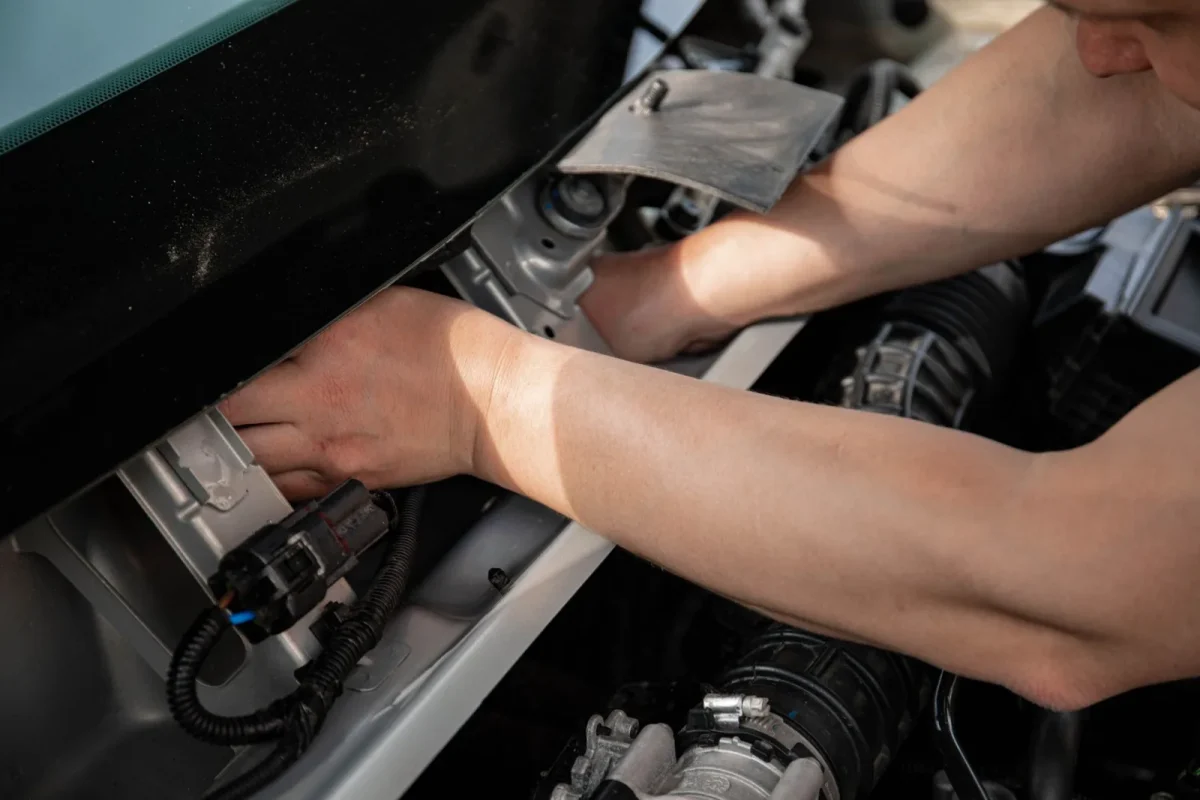
I have pulled connectors off Maverick X3s that looked fine from three feet away but had a melted pin the size of a grain of rice under the rubber boot. This single connector, where the stator harness meets the main wiring, causes more no-charge complaints on the Maverick than an actual dead stator.

Heat and years of vibration loosen the pins inside this connector. Once a pin loosens, resistance at that point spikes, the connector heats up under load, and the housing browns or melts. The stator can test perfectly on the bench and still deliver zero volts to the battery, because current never makes it past this one bad connection.
Pull the connector apart and look for brown or melted plastic, greenish corrosion on the pins, or a pin that pushes back into the housing when you try to mate it. A fix is a new connector pigtail, sold separately for 25 to 60 dollars, spliced in with heat shrink and dielectric grease packed into the new body.
Before You Buy Parts
Check this connector before you order a stator or a regulator rectifier. It takes two minutes to unplug it and look, and it is the cheapest possible fix on this entire list.
Accessory Load and the Turbo Cooling Fan
A stock Maverick charging system is sized for the stock machine. Add a 40 amp light bar, a 400 watt stereo amplifier, and a winch, and you can ask the stator for more current than it was built to deliver at low rpm.
Turbo X3 models add another wrinkle. The electric cooling fan for the intercooler keeps running for several minutes after you shut the key off, pulling current the whole time. On a system already marginal, that after-run fan often drains the battery flat in the parking lot.
If charging voltage tests fine at 13.8 to 14.7 volts but the battery still runs down with accessories on, compare your amperage draw against the stator’s rated output, typically 450 to 580 watts depending on year and trim. A battery isolator or a higher output stator beats replacing batteries every spring.
Quick Test Checklist Before You Order Parts
Run through this order every time. It takes about fifteen minutes and keeps you from spending on a part that was never broken. If you pull the ground strap bolt to inspect it, torque it back to 90 inch-pounds (10 Nm).
- Confirm battery voltage reads 12.6 volts or higher at rest before testing anything else
- Warm the engine to operating temperature before reading charging voltage
- Read voltage directly at the battery terminals, not from the dash display
- Hold a steady 3000 rpm for at least ten seconds before recording a reading
- Check the stator connector behind the flywheel cover for melted or brown plastic
- Inspect the ground strap between the engine case and the frame for corrosion
- Test the regulator rectifier in diode mode before assuming it is bad
When to Call In a Shop
Most Maverick charging problems come down to one part: a shorted stator, a failed regulator rectifier, or that one melted connector behind the flywheel cover. Testing all three costs you nothing but time and confirms the fix before you spend a dollar.
If your numbers point to the stator, budget 180 to 350 dollars for the part and 200 to 400 dollars for labor, since it usually means draining coolant and pulling the flywheel with a puller. A regulator rectifier runs 90 to 220 dollars and bolts on in under an hour.
Test first, in that order: battery, stator, regulator, connector. The meter will tell you exactly which part failed, and on a Maverick, it is often the cheapest one.
Frequently asked questions
What voltage should a Can-Am Maverick charging system put out?
A healthy Maverick reads 13.8 to 14.7 volts at the battery once the engine holds a steady 3000 rpm for about ten seconds. At idle, 12.8 to 13.5 volts is normal. Anything under 13.0 volts at 3000 rpm points to a stator or regulator problem, and anything over 15.0 volts means the regulator is overcharging.
Why does my Maverick X3 battery die even though the machine starts fine?
Turbo X3 models run an electric cooling fan that keeps pulling current for several minutes after you shut off the key. On a charging system that is already marginal, that extra draw after shutdown is often enough to leave the battery too weak to start the next morning. Heavy accessories like a stereo, light bar, and winch make the same problem worse.
How much does a Can-Am Maverick stator replacement cost?
Expect to pay 180 to 350 dollars for the stator itself, plus 200 to 400 dollars in labor if a shop has to pull the flywheel cover and the flywheel to reach it. A full job often lands between 400 and 700 dollars. Confirm the stator has actually failed with a resistance and AC output test before you order one.
Can a bad ground cause Maverick charging problems?
Yes. A loose or corroded ground strap between the engine case and the frame can make a healthy stator and regulator read like they have failed. Clean the ground connection and torque the bolt to about 90 inch-pounds before you condemn any other part.
Is the melted stator connector a known issue on the Maverick?
It is not an official recall, but it is one of the most common charging complaints shops see on the Maverick and Maverick X3. Heat and vibration loosen the pins inside the connector where the stator harness meets the main wiring, and the plastic housing browns or melts. A replacement pigtail costs 25 to 60 dollars and fixes it in under an hour.

Vidya Verma
Vidya Verma is a UTV and powersports technician with hands-on experience diagnosing electrical, charging, and starting problems on Polaris, Can-Am, and other side-by-side platforms. She writes practical, workshop-tested repair guides that help owners troubleshoot faults, choose the right parts, and get their machines running reliably in the field. When she's not under the hood, she's out riding trails and stress-testing the same fixes she recommends.