Key takeaways
- A jump start supplies the missing current, so the real fault sits in the battery or the charging system, not the starter.
- Load test the battery first, since a reading below 9.6 volts under crank means it cannot hold up on its own.
- Check charging output at 2500 to 3000 rpm, because anything outside 13.8 to 14.7 volts points at the stator or the regulator rectifier.
- A battery that reads fine at rest but collapses under load is sulfated or has a weak cell, even though it still takes a charge.
- Repeated jump starts are a symptom, not a fix, so test the charging system before you buy a new battery.
The machine fires the instant you clamp on jumper cables, runs fine all day, and then refuses to start again the next time you turn the key. Jump it again and it fires right up, like nothing was ever wrong.
That pattern is not bad luck. A jump start does one thing: it feeds the starter current from a second battery. If the machine needs that extra current every time, the fault lives in the battery or the charging system, not the starter, the solenoid, or the wiring between them.
This is one of the faster diagnoses in UTV electrical work. A meter, 15 minutes, and two tests tell you whether the battery will not hold a charge or the charging system is not replacing what the machine uses.
Buy a new battery first and there is a real chance you are back here in three weeks with the same complaint, because the battery was never the actual fault.
Why a Jump Start Points at the Battery or Charging System
A starter motor on a typical UTV can draw 150-250 amps for the half second it takes to spin the engine over. A tired battery can still run the dash lights and the fuel pump, but it sags hard the moment that load hits.
A second battery in parallel, which is what jumper cables create, makes up the difference. The starter, the solenoid, and the heavy cables never get tested at all, since the second battery supplies the current instead.
If those parts were the problem, a jump would not fix anything, because they do not care where the current comes from.
Step One: Load Test the Battery
Before touching the charging system, confirm the battery itself. With the key off and the machine sitting at least 30 minutes, a fully charged 12 volt battery should read 12.6-12.8 volts.
A reading of 12.0-12.4 volts means the battery is partially discharged, common after sitting all winter and not automatically bad. Below 11.9 volts, expect it to fail the next test.
Now load test it. Disable the ignition or pull the kill switch so the engine cannot fire, then crank for 5-10 seconds while you watch the meter. A good battery holds above 9.6 volts through the entire crank.
A drop into the 7-9 volt range that keeps falling, or a crank that noticeably slows, means the battery cannot support a cold start on its own, even after a full charge the night before.
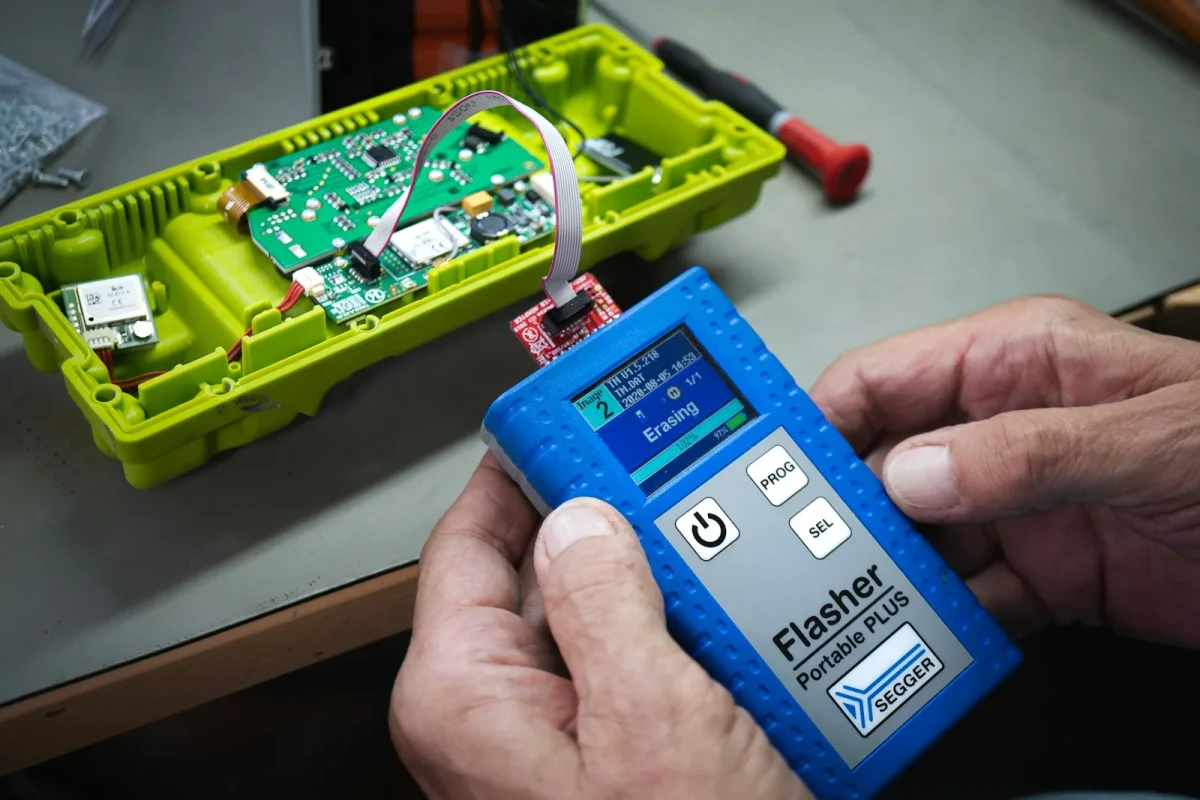
A shop load tester gives an exact number: load to half the battery’s rated cold cranking amps and it should hold above 9.6 volts for 15 seconds. Most UTV batteries run 300-450 CCA, so that is a 150-225 amp load.
Step Two: Check Charging Output With the Engine Running
A battery that fails the load test could be worn out, or it could be a good battery the charging system never tops off. Testing at the battery with the engine running tells them apart.
Set the meter to DC volts across the battery terminals, red to positive, black to negative, engine off first. Note the resting number, then start the engine (jump it if needed) and let it idle.
At idle, expect 13.0-13.6 volts. Bring the engine to 2500-3000 rpm for 10-15 seconds: a healthy system reads 13.8-14.7 volts at that rpm.
A reading flat at battery voltage, 12.6 volts or lower, even at 3000 rpm means the system is not charging at all. Above 15.0 volts, especially with a warm battery, means the regulator is not controlling voltage and is overcharging, which damages the battery fast.

Matching the Two Readings to a Diagnosis
Put the load test and the charging test side by side and the cause usually falls out on its own.
| Load test result | Charging test at 3000 rpm | Likely cause |
|---|---|---|
| Fails, below 9.6 volts | Good, 13.8-14.7 volts | Battery worn out or sulfated, charging system fine |
| Fails, below 9.6 volts | Flat at battery voltage or lower | Battery and charging system both likely need attention |
| Passes, holds above 9.6 volts | Flat at battery voltage or lower | Charging system fault, battery will fail the load test soon |
| Passes, holds above 9.6 volts | Over 15.0 volts, battery hot | Regulator rectifier overcharging, replace before battery damage |
A battery that passes the load test today will not stay cleared if the charging system is not replacing what the machine uses. Left alone, it will be back to jump-start-only within weeks as the battery drains a little further each ride.
Chasing Down a Charging System Fault
When the charging numbers are low or absent, the fault is almost always the stator, the regulator rectifier, or the wiring and connectors between them. Work through them in that order.
Stator Resistance and Output
With the key off, unplug the stator connector, usually a three wire plug near the flywheel cover, and measure resistance leg to leg on the ohms setting. Most small engine stators read 0.2-1.2 ohms phase to phase.
Zero ohms means a shorted winding, and open or infinite ohms means a burned out winding. Either way, the stator needs to be replaced.
If resistance looks fine, check AC output: start the engine with the connector unplugged and measure AC voltage leg to leg at 3000 rpm. Expect 20-40 VAC per leg, with all three legs close in value, since one low leg means a partially shorted winding even if resistance looked normal.
Regulator Rectifier Output
If the stator tests good on resistance and AC output but DC voltage at the battery stays low, the regulator rectifier is the suspect. It converts the stator’s AC to DC and limits the final voltage.
A failing unit often passes some current but cannot hold the 13.8-14.7 volt window a healthy one does.
Regulator rectifiers fail from heat more than age. Keep the mounting surface clean metal to metal and the cooling fins clear of mud, since many mount low on the frame with poor airflow.
Connectors and Ground Straps
I had a customer’s Can-Am come into the shop after he had already installed a new battery and a new regulator rectifier chasing this exact complaint. The real fault was a stator connector with two melted, blackened pins, which had dropped charging output to almost nothing under load.
A 15 dollar connector and 20 minutes of work fixed what two expensive parts could not. Check connectors before you start replacing components, not after.
Before condemning the stator or the regulator rectifier, pull every connector in the charging circuit and look for brown or black discoloration, a sign of heat from a loose or corroded pin. Check the ground strap too, since a corroded ground can starve the circuit and mimic a dead stator on a meter.
When the Battery Itself Is Worn Out
Not every jump-start-only complaint traces back to the charging system. Sealed AGM batteries, the type most UTVs use, typically last 2-4 years depending on climate and how often the machine sits.
A battery with one weak internal cell can rest at a normal looking 12.4-12.6 volts and still accept a charge, but it will not hold up under a starter load because that cell cannot keep pace with the other five. That is why the load test matters more than the resting voltage.
Watch for a false reading right after a jump or a charge: a battery can show a surface charge of 12.8-13.0 volts for 20-30 minutes even though its true state of charge is much lower. Let it rest at least 30 minutes with no load before trusting the number.
Tip
Do not make a habit of carrying a jump pack instead of fixing the machine. Every jump asks the battery and the charging system to do the job that just failed, and repeated deep discharges shorten what capacity is left.
A Field Checklist Before You Buy Parts
Run through this order before you spend money on a new battery, stator, or regulator rectifier.
- Check resting battery voltage after 30 minutes with no load (12.6-12.8 volts is fully charged).
- Load test or crank test the battery and confirm it holds above 9.6 volts.
- Test charging output at the battery at idle and again at 2500-3000 rpm.
- Confirm the reading falls inside 13.8-14.7 volts at higher rpm, not flat and not over 15.0 volts.
- Inspect the stator connector, the regulator rectifier connector, and the ground strap for corrosion or heat damage.
- If the stator is suspect, check resistance leg to leg with the connector unplugged (0.2-1.2 ohms typical).
Safety
Jumper cables carry enough current to spark and to boil a battery that is frozen or already damaged. Connect positive to positive first, then negative to a solid ground away from the battery, and keep sparks away from the vents. Wear eye protection while you work.
Get It Running Without Needing a Jump Every Time
A machine that only starts on a jump is not broken in some mysterious way. It cannot supply or replace its own current, and the two tests above tell you which in about 15 minutes.
Fix the actual fault, whether that is a worn battery, a failing stator, a tired regulator rectifier, or a corroded connector, and the jump-start habit disappears on its own. Guessing and swapping parts in the wrong order costs more than running the tests does.
Keep the jump pack in the machine anyway. It is a good tool for a genuinely cold morning or a battery low from sitting, just not a substitute for finding out why the machine needed one in the first place.
Frequently asked questions
Why does my UTV start fine with a jump but not on its own?
A jump start feeds the starter current from a second battery, which covers for a battery or charging system that cannot supply enough current on its own. If the machine needed outside help to start, the starter and solenoid are not the problem. Load test the battery and check charging output at 3000 rpm to find which system is failing.
How long should I run the engine after a jump before shutting it off?
Fifteen to twenty minutes at 2500 rpm or higher gives a genuinely low battery a partial recharge, but it will not fix a charging system fault. Check the voltage at the battery during that run. If it never climbs past 13.0 volts, the alternator side of the system needs attention, not more drive time.
Can a corroded ground strap cause jump start only symptoms?
Yes. A corroded or loose ground strap adds resistance to the entire charging circuit and can drop output at the battery by several volts even when the stator and regulator rectifier are both healthy. Clean the ground connection at the frame and the engine case before you replace any charging parts.
How do I tell a bad stator from a bad regulator rectifier?
Unplug the stator and test its AC output directly, expecting 20 to 40 VAC per leg at 3000 rpm with all three legs close in value. If the stator output looks good but DC voltage at the battery is still low or absent, the regulator rectifier is converting and limiting the voltage incorrectly and needs to be replaced.
Is it safe to keep jump starting the machine to get through the week?
It will get you through a task, but each deep discharge shortens what is left of the battery's life, and a charging fault does not improve on its own. Plan on running the two tests within a few days, since a battery that is fully drained repeatedly can drop below the point where it will accept a normal charge at all.

Vidya Verma
Vidya Verma is a UTV and powersports technician with hands-on experience diagnosing electrical, charging, and starting problems on Polaris, Can-Am, and other side-by-side platforms. She writes practical, workshop-tested repair guides that help owners troubleshoot faults, choose the right parts, and get their machines running reliably in the field. When she's not under the hood, she's out riding trails and stress-testing the same fixes she recommends.